How to Turn Shopify Plus Discovery into a Delivery Roadmap

Contents
- The difference between discovery and roadmapping
- What needs to be ready before roadmapping
- Who should take part
- Start by carrying the discovery decisions forward
- Step 1: Build the feature inventory
- Global storefront
- Product discovery
- Product detail
- Conversion
- Customer accounts
- B2B and wholesale
- Content and brand
- Integrations and operations
- Delivery and readiness
- Step 2: Break features into stories and tasks
- Example: product filtering
- Step 3: Classify the implementation approach
- Step 4: Estimate effort at story level
- Use ranges when uncertainty is real
- Step 5: Prioritise MVP, Phase 2 and future work
- MVP
- Phase 2
- Phase 3 and future
- From our experience: use the line to create alignment
- A practical prioritisation test
- Step 6: Map dependencies and the critical path
- Step 7: Organise the work into parallel workstreams
- Experience design
- Content and migration
- Storefront development
- Integrations and data
- SEO
- Data and analytics
- Testing and readiness
- Deployment and post-launch
- Integration and technical planning
- Shopify Plus constraints that need story-level decisions
- Checkout extensibility
- Shopify B2B
- Markets and expansion stores
- Metafields and metaobjects
- Apps and platform performance
- API and webhook limits
- Operational automation
- Content, SEO and analytics are roadmap work
- Content
- SEO
- Analytics
- Plan testing, UAT and training at story level
- Keep a live risk, dependency and decision log
- What the roadmapping session should produce
- Feature inventory
- Story-level estimate
- Phased product roadmap
- Project roadmap
- Integration architecture
- Risk and dependency log
- Role and capacity plan
- Decision log
- A practical roadmapping session structure
- Session 1: Feature inventory
- Session 2: Story decomposition and technical approach
- Session 3: Estimation and phasing
- Session 4: Roadmap approval
- How to manage price without pretending every detail is known
- What happens after roadmapping
- Common roadmapping mistakes
- Estimating from feature names
- Treating every idea as MVP
- Hiding uncertainty inside development estimates
- Forgetting client-owned work
- Choosing apps without operational review
- Sequencing by department rather than dependency
- Leaving testing and training until the end
- Disconnecting the roadmap from discovery
- Roadmapping checklist
- Final thoughts
Shopify Plus planning series
Step 1: Run the 7-Sheet Discovery Workshop
Step 2: Turn discovery into a delivery roadmap. You are here.
A good discovery workshop creates alignment. It explains the business context, why the project exists, which outcomes matter, what could put delivery at risk and what a successful launch needs to include.
The next challenge is turning that shared understanding into a plan a delivery team can actually use.
This is where the roadmapping session begins. It takes the findings from the 7-Sheet Discovery Workshop and breaks them into features, stories, tasks, dependencies, estimates, workstreams and delivery phases. It is the point where the project moves from “why and what” to “how, when, who and how much.”
I have found this stage particularly valuable on Shopify Plus migrations. Large commerce projects rarely fail because the team forgot that a product page or checkout exists. Problems usually come from details that were not broken down early enough: product data rules, regional differences, integration ownership, B2B logic, content dependencies, SEO changes, testing responsibilities or app limitations.
A detailed roadmap makes those details visible before design and development commit the project to an approach.
The difference between discovery and roadmapping
Discovery and roadmapping are closely connected, but they are not the same exercise.
The 7-Sheet Workshop is a stakeholder alignment tool. It covers:
- Business context
- Project purpose and goals
- Platform and delivery approach
- Critical success factors
- Risks
- Definition of done
- Open issues and the carpark
It helps the group agree what the project is trying to achieve and what must be protected.
Roadmapping is the delivery team’s working plan. It covers:
- Features and customer journeys
- Page templates and reusable components
- User stories and technical tasks
- Native, app-based and custom approaches
- Effort by role and discipline
- Dependencies and critical path
- MVP, later phases and future ideas
- Workstream timelines and handovers
- Integration and migration planning
- Testing, training and launch preparation
Put simply, discovery answers why, what and for whom. Roadmapping answers how, when, who and how much.
Skipping discovery can produce a detailed roadmap for the wrong project. Skipping roadmapping can produce good strategic notes with no reliable path into delivery. Both steps matter.
What needs to be ready before roadmapping
Roadmapping works best when the main discovery decisions are documented and the people in the room know what is still open.
Before starting, I look for:
- An agreed project purpose
- Prioritised goals and success measures
- Initial MVP boundaries
- A current platform and integration map
- Known customer, operational and regional requirements
- Critical success factors
- A first risk register
- A working definition of done
- Named owners for open discovery questions
- Access to existing analytics, content and system documentation
Not every question needs to be resolved. In fact, some roadmapping work exists to investigate an unknown. The important thing is to distinguish a confirmed requirement from an assumption, and to give unresolved decisions an owner and deadline.
If the team cannot explain the purpose or priorities, return to Step 1, the 7-Sheet Discovery Workshop before estimating features.
Who should take part
Roadmapping needs a more delivery-focused group than the main discovery session, while still keeping decision-makers close enough to resolve trade-offs.
The core group will normally include:
- Product or project manager
- Technical lead or solution architect
- UX and information architecture
- Design lead
- Front-end and back-end development
- SEO specialist
- Data and analytics specialist
- Content or copy lead
- Quality assurance
- DevOps or platform operations where relevant
- E-commerce or trading lead
Specialists should join for the workstreams they own. Finance may be needed for payments and reconciliation. Operations may be needed for fulfilment and returns. Customer service may own account and contact journeys. Regional teams may need to approve market differences. ERP, OMS, PIM or 3PL owners must be involved when an integration is being estimated.
Stakeholders do not need to sit through every story estimate. They do need to approve priorities, scope choices and trade-offs at planned checkpoints.
Start by carrying the discovery decisions forward
The first part of roadmapping is not creating new feature ideas. It is reviewing the decisions already made.
Place the discovery outputs beside the roadmap and check:
- Which goals does the roadmap need to support?
- Which success factors affect architecture or acceptance?
- Which risks require investigation or contingency?
- Which definition-of-done items need stories or tasks?
- Which open issues block estimation?
- Which MVP boundaries have already been agreed?
This creates traceability. A feature should exist because it supports a customer journey, business outcome, operational requirement or delivery obligation. If no one can explain why a feature is needed, it should not quietly enter the estimate.
Step 1: Build the feature inventory
The feature inventory is the broadest view of what the project may need. It captures storefront, customer, content, operational, integration and delivery requirements before they are separated into detailed stories.
For a Shopify Plus project, I normally organise the inventory into areas such as:
Global storefront
- Announcement and promotional messaging
- Header and navigation
- Search entry points
- Country, language and currency selection
- Footer and service links
- Consent and preferences
- Accessibility controls and shared states
Product discovery
- Collections and category structure
- Search and predictive search
- Filters and sorting
- Merchandising rules
- Product recommendations
- Product finders or guided selling
- Recently viewed and saved items
Product detail
- Product information and media
- Variant selection
- Availability and delivery messages
- Subscriptions or purchase options
- Bundles and related products
- Reviews and user-generated content
- Samples, swatches or consultation journeys
- Store or stockist availability
Conversion
- Cart behaviour
- Discounts and promotions
- Gift cards and gifting
- Shipping estimates
- Checkout content and validation
- Payment methods and buy now, pay later
- Post-purchase communication
- Returns and exchanges
Customer accounts
- Registration and login
- Order history
- Address management
- Saved products
- Subscription management
- Loyalty and referrals
- Customer service handover
- Privacy and data requests
B2B and wholesale
- Company profiles and locations
- Buyer roles and permissions
- Catalogues and price lists
- Quantity rules and volume pricing
- Payment terms and invoicing
- Purchase orders
- Sales representative involvement
- ERP and finance handover
Content and brand
- Landing pages
- Editorial content
- Campaign pages
- FAQs and support content
- Store or location pages
- Market-specific content
- Reusable sections and content models
- Digital asset and translation workflows
Integrations and operations
- ERP, OMS, PIM and WMS
- Third-party logistics and fulfilment
- CRM and lifecycle marketing
- Search, reviews, loyalty and subscriptions
- Customer service and returns
- Tax, duties, fraud and payments
- Analytics, consent and reporting
- Data migration and reconciliation
Delivery and readiness
- Environments and access
- SEO migration
- Analytics implementation
- Content migration
- Quality assurance
- User acceptance testing
- Training and documentation
- Launch, rollback and post-launch support
The inventory should be complete enough to reveal the project shape, but it does not need a perfect solution attached to every line. Detailed decomposition comes next.
Step 2: Break features into stories and tasks
A feature name is rarely detailed enough to estimate.
“Product filters” sounds small until the team asks which data defines the filters, who maintains it, whether values change by market, how filters behave on mobile, which combinations need indexation controls and what happens when product data is incomplete.
Each feature should be broken into:
- Stories: customer-facing or user-facing outcomes
- Tasks: technical, operational or delivery work required to make the story possible
- Acceptance criteria: the conditions that show the story is complete
- Dependencies: other decisions, systems or stories that must happen first
- Unknowns: questions that need investigation before the estimate can be trusted
Example: product filtering
A story may be:
As a customer, I can filter a collection by the attributes that matter to my purchase so I can find suitable products quickly.
Tasks may include:
- Confirm filter attributes and merchandising rules
- Define the metafield structure
- Clean and populate product data
- Configure Shopify Search & Discovery or another tool
- Design desktop and mobile filter behaviour
- Build active-filter states and empty results
- Define SEO rules for parameter combinations
- Add analytics events
- Test catalogue size, accessibility and performance
- Document the ongoing product-data process
The story is no longer just a front-end component. It is a connected piece of product data, UX, technology, SEO, analytics and operations.
Step 3: Classify the implementation approach
For each story, record the likely approach:
- Native Shopify capability
- Theme or configuration work
- Shopify app
- Custom app or middleware
- Integration with an existing system
- New business process
- Requirement that should be changed or removed
- Investigation needed before a decision
This classification helps the team compare build effort with licence cost, operational overhead, data risk and long-term support.
An app is not automatically simpler than custom work. It may introduce theme code, customer-data access, recurring cost, API limits or market restrictions. Custom development is not automatically better either. It creates ownership, testing and maintenance responsibilities.
The roadmap should show the trade-off, not hide it.
Step 4: Estimate effort at story level
Once the story, tasks and approach are understood, estimate the effort required from each discipline.
Depending on the project, roles may include:
- Content
- Strategy
- SEO
- Data and analytics
- UX
- Information architecture
- Design
- Copywriting
- Technical lead
- Back-end development
- Front-end development
- DevOps
- Quality assurance
- Development QA
- Project management
The purpose of role-based estimation is not to create false precision. It is to show where the work sits and prevent invisible disciplines from being forgotten.
A product page story may require only a few development hours but substantial product-data, UX, content, design, SEO and testing work. A data migration may need little visual design but significant technical analysis, rehearsal, reconciliation and project coordination.
Story estimates roll up into feature, epic, workstream and phase totals. This gives the project manager a first view of cost, capacity and timeline.
Use ranges when uncertainty is real
If an integration has not been documented or an app has not been tested, use a range or a time-boxed investigation rather than pretending the estimate is fixed.
Record the assumption beside the estimate. For example:
- Estimate assumes the ERP exposes the required customer and order endpoints
- Estimate excludes historic order migration beyond the agreed period
- Estimate assumes one shared product model across markets
- Estimate requires checkout validation to be supported by extensibility
An estimate without its assumptions is difficult to manage later.
Step 5: Prioritise MVP, Phase 2 and future work
Roadmapping makes scope trade-offs visible. Every feature should be placed into a delivery phase rather than left in one large backlog.
MVP
The minimum set of capabilities required to launch safely and achieve the agreed project purpose.
MVP should include operational readiness, SEO, analytics, accessibility, testing and training. Those are not optional extras simply because customers do not see them as features.
Phase 2
Valuable improvements that can follow launch without preventing the first release from succeeding. These may include richer personalisation, additional account tools, advanced merchandising or process automation.
Phase 3 and future
Ideas that need more evidence, depend on later business changes or are not justified by the current goals.
From our experience: use the line to create alignment
When we run these roadmapping sessions, one of the most important outcomes is alignment between the client and agency on what belongs in MVP, what moves into Phase 2 and what is held for Phase 3. This gives both teams the same expectations before design and development begin.
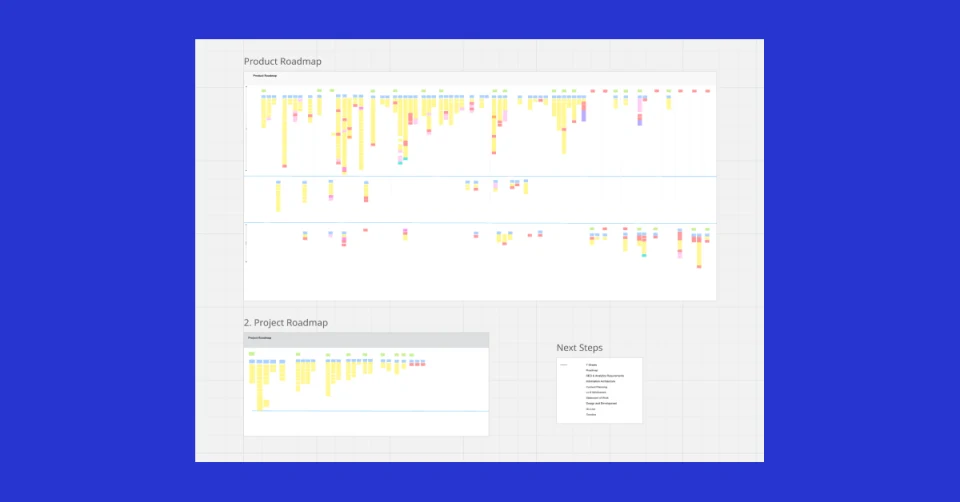
We make that decision visual. MVP features sit above a clear scope line. Phase 2, Phase 3 and nice-to-have ideas sit below it. The items below the line are not forgotten. They remain visible and can move into scope when priorities, evidence, budget or capacity change. This is much clearer than hiding deferred ideas in a separate document or leaving everything in one undifferentiated backlog.
The format works particularly well for larger teams because everyone can contribute, question assumptions and see the effect of each trade-off. Running the session in person usually creates the strongest conversation, but the same method works online with shared boards in Miro or FigJam. The important part is that the board stays open, collaborative and easy for every participant to understand.
Before the session ends, confirm the features above and below the line, the reason for each decision, any assumptions attached to it and who has authority to approve a later scope change. That shared visual record becomes a practical reference for the client, agency and delivery team.
A practical prioritisation test
For each feature, consider:
- Customer value
- Business value
- Operational necessity
- Legal or compliance need
- Dependency on other work
- Delivery risk
- Evidence available
- Cost and capacity
- Whether a safe workaround exists
MVP is not the smallest possible website. It is the smallest release that can achieve the agreed purpose safely and be operated by the business.
Step 6: Map dependencies and the critical path
Features cannot be sequenced by priority alone.
Product filtering may depend on the product data model. Product page design may depend on confirmed variant structures. Checkout work may depend on payment and shipping decisions. SEO redirect mapping may depend on the final information architecture. Content entry may depend on approved templates and translations.
The roadmap should show:
- Story-to-story dependencies
- External vendor dependencies
- Decision deadlines
- Data and content readiness
- Environment and access dependencies
- Work that can run in parallel
- Work that controls the launch date
This is where a feature list becomes a project roadmap.
The critical path should be visible to stakeholders. If an ERP interface or product model controls several downstream workstreams, that decision deserves more attention than a small visual enhancement even if it is less exciting to discuss.
Step 7: Organise the work into parallel workstreams
Large Shopify Plus projects rarely move through one simple sequence. Several workstreams run at the same time and meet at planned handovers.
Typical workstreams include:
Experience design
Information architecture, user journeys, wireframes, design system, templates and component states.
Content and migration
Content inventory, ownership, writing, photography, translation, entry, product data and migration rehearsals.
Storefront development
Theme architecture, components, customer interactions, performance and accessibility.
Integrations and data
System interfaces, middleware, migration scripts, error handling, monitoring and reconciliation.
SEO
URL architecture, redirects, canonicals, hreflang, structured data, internal linking and launch monitoring through Google Search Console.
Data and analytics
Measurement plan, consent, Google Analytics, tag management, reporting and validation.
Testing and readiness
Functional QA, cross-browser and device testing, integration testing, UAT, training, documentation and support preparation.
Deployment and post-launch
Data freeze, final migration, cutover, rollback planning, monitoring, incident ownership and the first optimisation backlog.
Each workstream needs milestones, inputs, outputs, owners and handovers. The roadmap should show how they meet, not just how they progress separately.
Integration and technical planning
Integration names are not enough for accurate roadmapping. “Connect Cin7” or “connect the ERP” does not explain what the integration needs to do.
For each integration, map:
- Business process supported
- System of record
- Data entities and fields
- Direction of travel
- Real-time, event-based or batch pattern
- Expected frequency and volume
- Authentication and access
- Error handling and retry behaviour
- Monitoring and alerting
- Reconciliation process
- Manual fallback
- Support owner
This should create a first integration architecture and expose gaps that need separate technical discovery.
If the team cannot confirm the interface, create an investigation story. Do not hide unknown integration work inside a general development estimate.
Shopify Plus constraints that need story-level decisions
Shopify Plus provides a strong commerce foundation, but every requirement still needs to be assessed against the platform.
Checkout extensibility
Legacy checkout scripts and customisations may need to move to Shopify Functions, UI extensions, Checkout Blocks or a changed business process.
Roadmap the checkout requirement as a customer and operational outcome. Then validate whether the proposed approach can support the required market, payment and account states.
Shopify B2B
Company profiles, locations, catalogues, price lists, buyer permissions, payment terms and purchase orders affect customer experience, data and ERP processes. The Shopify B2B and wholesale guide explains the main decisions in more detail.
Markets and expansion stores
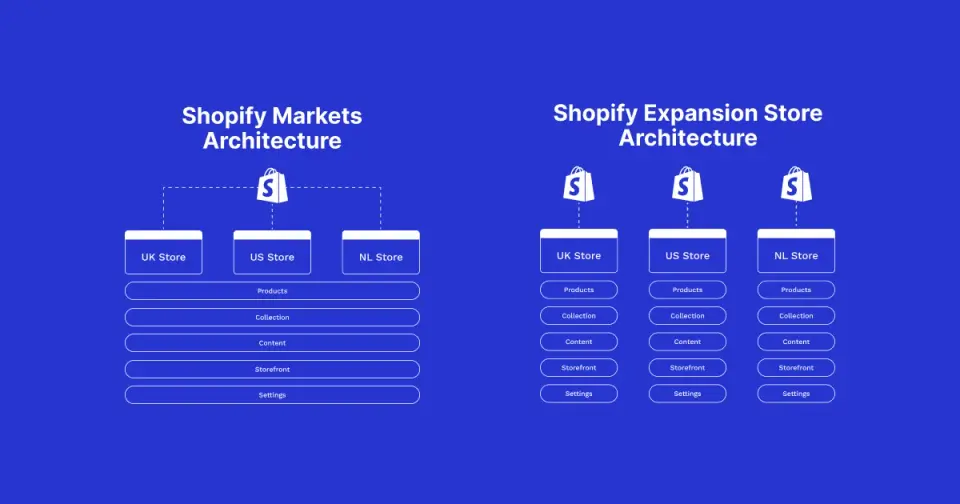
International architecture changes domains, content, catalogue, payments, tax, fulfilment, governance and SEO. Decide the model before estimating duplicated or market-specific work. See the guide to Shopify Markets versus expansion stores.
Metafields and metaobjects
Content and product attributes need a governed data model. Filters, product finders, comparison, content sections and integrations may all depend on the same field structure.
Roadmap data modelling before downstream templates and migration. If bulk data needs to be moved or rehearsed, tools such as Matrixify may form part of the migration approach.
Apps and platform performance
Every app should be assessed for capability, market support, customer-data access, performance, accessibility, maintenance and total cost. App selection should include a proof of concept where the requirement or integration is important.
API and webhook limits
Integration patterns need to account for Shopify API limits, event delivery, retries, reconciliation and failure states. The happy path is only one part of the story.
Operational automation
Shopify Flow can support tagging, notifications, review queues and other workflows, but the business rule, owner and exception path still need to be defined.
Content, SEO and analytics are roadmap work
These disciplines should not sit outside the feature estimate.
Content
Every template needs a purpose, content owner, source, approval process and migration rule. New product finders or comparison journeys may require data that does not exist today. Translation and legal review may control the timeline.
SEO
SEO and GEO stories should cover URL structure, redirect mapping, canonicals, hreflang, metadata, headings, structured data, XML sitemaps, internal links, performance and post-launch monitoring.
SEO requirements should be linked to the relevant templates and features. For example, product filtering needs indexation rules, market architecture needs hreflang and a migration needs redirect acceptance criteria.
Analytics
Measurement stories should begin with decisions the business needs to make. Define events, parameters, consent, data layers, dashboards and validation for priority journeys.
If an MVP feature cannot be measured or operated, its definition of done is incomplete.
Plan testing, UAT and training at story level
Testing effort grows with the number of markets, devices, customer states, integrations and purchasing paths.
The roadmap should cover:
- Functional testing
- Accessibility testing
- Cross-browser and device testing
- Performance testing
- Payment and checkout testing
- Integration and failure testing
- Data migration reconciliation
- SEO pre-launch checks
- Analytics validation
- User acceptance testing
- Regression testing
- Launch rehearsal
Assign UAT scenarios to business owners. The delivery team can test whether a feature behaves as specified, but operational teams need to confirm that it supports the real process.
Training and handover also need stories, estimates and acceptance criteria. Documentation, role setup and support procedures should be ready before launch, not written after the project team has moved on.
Keep a live risk, dependency and decision log
The roadmapping session will surface new risks and decisions. Add them to the project record immediately.
Examples include:
- Checkout extensibility may not support a required validation
- ERP sync timing is still to be confirmed
- A product builder requires separate technical scoping
- Filters depend on a new metafield structure
- Reviews depend on final app selection
- Local teams have not approved the shared catalogue model
- Historical orders exceed the agreed migration volume
- Product photography will not be ready for content entry
Each item needs an owner, next action, due date and effect on the estimate or critical path.
Do not remove an unknown from the roadmap simply because it cannot be estimated yet. Represent it as investigation work and show which decisions depend on it.
What the roadmapping session should produce
A finished roadmap should give the organisation more than one large estimate.
Key outputs include:
Feature inventory
Features grouped by customer journey, template, business process and integration area.
Story-level estimate
Effort by role, total effort, assumptions and confidence for each story.
Phased product roadmap
MVP, Phase 2 and future features with clear reasons for each decision.
Project roadmap
Workstreams, milestones, dependencies, handovers and critical path.
Integration architecture
Systems, data ownership, interfaces, sync patterns, monitoring and open technical questions.
Risk and dependency log
Known blockers, uncertainties, mitigations, owners and decision dates.
Role and capacity plan
Which disciplines are needed, when they are needed and where internal or vendor availability affects the schedule.
Decision log
Approved trade-offs, rejected approaches, assumptions and items that still require stakeholder sign-off.
These outputs become the basis for a statement of work, budget, delivery timeline and mobilisation plan.
A practical roadmapping session structure
For a large migration, roadmapping is usually a short programme rather than one very long meeting.
Session 1: Feature inventory
- Review discovery outcomes
- Map customer and operational journeys
- Capture storefront, content and integration features
- Identify known dependencies and unknowns
Session 2: Story decomposition and technical approach
- Break priority features into stories and tasks
- Classify native, app, custom and investigation work
- Map data, platform and integration dependencies
- Draft acceptance criteria
Session 3: Estimation and phasing
- Estimate effort by role
- Review assumptions and confidence
- Prioritise MVP, Phase 2 and future work
- Identify critical path and capacity constraints
Session 4: Roadmap approval
- Review product and project roadmaps
- Confirm trade-offs
- Approve MVP boundaries
- Assign open decisions
- Agree the next planning and design outputs
The exact format depends on project size. A smaller store may need two focused sessions. A global migration with B2B, several integrations and independent markets will require specialist follow-ups.
How to manage price without pretending every detail is known
Roadmapping should improve commercial confidence, but it cannot remove every unknown.
Separate work into:
- Well-understood stories with a stable estimate
- Stories estimated within an agreed range
- Time-boxed investigation work
- External costs such as apps, licences and vendors
- Client-owned work such as content, data preparation or UAT
- Contingency tied to named risks
This is more useful than one fixed number with hidden assumptions.
When an investigation changes the scope, update the roadmap and decision log. The roadmap is a controlled working document, not a promise that nothing will ever change.
What happens after roadmapping
Once the roadmap is approved, the project can move into detailed planning and execution with a much stronger foundation.
Typical next steps include:
- Finalise the statement of work and delivery team.
- Confirm the solution and integration architecture.
- Develop the information architecture and URL model.
- Create low-fidelity wireframes for priority journeys.
- Define the content model and migration plan.
- Complete SEO and analytics requirements.
- Produce the visual design and component system.
- Begin development and integration work.
- Rehearse data migration and testing.
- Prepare UAT, training, cutover and post-launch support.
The roadmap remains active throughout these stages. Design may expose a new dependency. Integration testing may change an estimate. Content work may reveal missing product data. Those changes should be recorded and managed against the agreed goals and MVP.
Common roadmapping mistakes
Estimating from feature names
Break the feature into customer behaviour, technical tasks, data, content, SEO, analytics and acceptance before assigning effort.
Treating every idea as MVP
Use the project purpose, success factors and dependencies to make trade-offs. A later phase is often the responsible choice.
Hiding uncertainty inside development estimates
Create investigation stories and record assumptions. Unknown work does not become safer because it is given a precise number.
Forgetting client-owned work
Content, product data, legal approval, translations, access and UAT can control the launch date. Show them on the roadmap with owners.
Choosing apps without operational review
Confirm capability, data use, market support, maintenance, performance and cost before treating an app as the solution.
Sequencing by department rather than dependency
Workstreams can run in parallel, but handovers and critical decisions must be explicit.
Leaving testing and training until the end
Estimate them with the features and plan readiness milestones before launch.
Disconnecting the roadmap from discovery
Every significant feature and trade-off should connect back to a goal, journey, risk or definition-of-done requirement.
Roadmapping checklist
Before approving the roadmap, confirm:
- Discovery outcomes are reflected in the feature plan
- Every MVP feature supports an agreed purpose or requirement
- Features are decomposed enough to estimate
- Native, app, custom and investigation approaches are identified
- Role-based effort is visible
- Assumptions are recorded beside estimates
- MVP, Phase 2 and future work are separated
- Dependencies and critical path are mapped
- Integrations include data ownership and failure handling
- Content and product-data work have owners
- SEO and analytics are included in the relevant stories
- Testing, UAT, training and launch are estimated
- Risks and unknowns have owners and next actions
- Workstreams have milestones and handovers
- Stakeholders have approved the main trade-offs
- The roadmap can support a statement of work and capacity plan
If several of these points are missing, detailed design is likely to begin with avoidable uncertainty.
Final thoughts
Roadmapping is where the project becomes real.
The 7-Sheet Workshop creates a shared view of the business, goals, risks and success. The roadmapping session turns that view into stories, estimates, phases, responsibilities and a critical path.
Across complex commerce projects, this step has helped me expose platform constraints earlier, price work more honestly and keep delivery teams and stakeholders aligned on what is being built first and why.
The roadmap will continue to change as the team learns. That is expected. What matters is that change happens against an agreed purpose, with the effect on scope, timing and risk made visible.
If you are starting this process, begin with Step 1, the 7-Sheet Discovery Workshop. When that alignment is in place, New Site Agency can help turn it into a detailed Shopify Plus delivery roadmap covering customer experience, architecture, integrations, SEO, analytics, testing and launch.